
Introduction
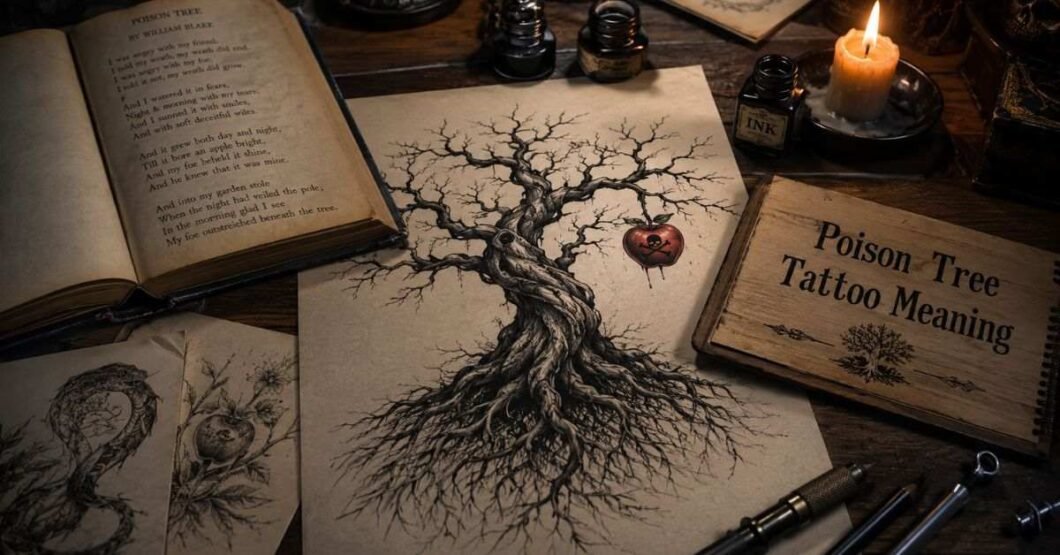
The poison tree tattoo meaning carries deep emotional and literary symbolism that resonates strongly in today’s world of self-awareness and mental health advocacy. Inspired by William Blake’s powerful poem “A Poison Tree,” this tattoo design represents hidden anger, emotional suppression, betrayal, and ultimately personal transformation.
The poison tree tattoo appeals to a lot of individuals due to its complex psychological depth as well as its gloomy appearance. In a society where bottled-up emotions often lead to internal struggles, this design serves as both a warning and a reminder of the importance of emotional honesty. Understanding the poison tree tattoo meaning before getting inked ensures your tattoo reflects your personal journey rather than just a striking visual.
In this complete guide, you’ll explore Blake symbolism, hidden anger themes, trauma healing interpretations, design ideas, placement tips, comparisons, and safe tattoo advice. Whether you’re a literature lover, someone healing from past pain, or simply searching for meaningful body art, this article will help you make an informed decision.
The Literary Roots Behind the Poison Tree Symbol
To truly understand the poison tree tattoo meaning, we must begin with William Blake’s 1794 poem. In “A Poison Tree,” Blake describes how suppressed anger grows like a plant when left unspoken.
The poem presents a powerful metaphor:
- Anger expressed = resolved
- Anger hidden = nurtured
- Poisoned fruit = destructive consequences
Key symbolic elements from the poem include:
- The tree as emotional growth
- The fruit as revenge
- The garden as the human mind
- Night and deceit as hidden resentment
Blake’s work remains relevant because emotional repression is still a common human experience. This literary foundation gives the tattoo intellectual depth and distinguishes it from generic dark tree designs.
For literature enthusiasts, the tattoo becomes a tribute to Romantic poetry. For others, it symbolizes psychological insight and emotional awareness.
Core Poison Tree Tattoo Meaning Explained
At its heart, the poison tree tattoo’s meaning centers on suppressed emotions and their consequences. But interpretations vary depending on the wearer’s story. The most typical symbolic connotations are as follows:
- Hidden Anger: Emotions kept inside that grow stronger over time.
- Betrayal: Emotional wounds caused by deceit or broken trust.
- Personal Growth: Recognizing toxic patterns and overcoming them.
- Emotional Repression: The danger of avoiding difficult feelings.
- Transformation: Turning pain into wisdom.
Many people interpret the tree as a metaphor for the human mind:
- Roots = subconscious emotions
- Trunk = personal strength
- Fruit = consequences of thoughts and actions
Unlike other dark tattoo symbols (like skulls or ravens), the poison tree carries psychological depth rather than just mortality symbolism.
Hidden Anger and Psychological Interpretation
A major aspect of the poison tree tattoo meaning is its connection to hidden anger. Modern psychology supports Blake’s metaphor: suppressed anger can build internal stress. According to the American Psychological Association:
- Chronic anger suppression increases stress hormones.
- It may contribute to anxiety and depression.
- Emotional repression can affect physical health.
Symbol Breakdown
| Element | Psychological Meaning |
| Dark roots | Subconscious resentment |
| Twisted branches | Complicated emotions |
| Poisoned fruit | Harmful consequences |
| Withered leaves | Emotional exhaustion |
This interpretation makes the tattoo deeply personal. It can serve as:
- A reminder to communicate openly
- A symbol of emotional accountability
- A warning against internalizing pain
In this way, the design becomes not just art but emotional philosophy.
Trauma Healing and Personal Growth

While the original poem focuses on revenge, modern interpretations expand the poison tree tattoo meaning into trauma healing. Many individuals choose this tattoo after overcoming the following:
- Toxic relationships
- Betrayal
- Emotional manipulation
- Childhood trauma
Case Study
Case: Daniel’s Healing Journey
Daniel chose a half-dead, half-blooming poison tree tattoo after therapy helped him confront years of suppressed anger.
His design included
- Dark roots fading into lighter branches
- Red fruit symbolizing painful memories
- A subtle quote from Blake
For him, the tattoo symbolized transformation—not revenge.
This shift toward healing reflects today’s mental health awareness movement. The tattoo becomes a badge of survival and emotional growth.
Popular Design Variations
Design choices strongly influence the interpretation of the poison tree tattoo meaning.
Popular styles include
- Minimalist silhouette
- Realistic gothic tree
- Tree with red apple
- Half-dead, half-living tree
- Quote-integrated design
Design Comparison Table
| Style | Symbolic Tone | Ideal Placement |
| Minimalist | Subtle reminder | Wrist/ankle |
| Realistic | Intense emotion | Back/thigh |
| Watercolor | Healing & change | Forearm |
| Quote + Tree | Literary tribute | Ribcage |
Each variation shifts emotional emphasis. A dark, twisted tree leans toward warning symbolism, while blooming branches suggest recovery.
Placement Ideas and Symbolism
Placement adds another layer to the poison tree tattoo meaning.
Common placements include
- Forearm: Visible commitment to emotional honesty
- Back: Private transformation
- Ribcage: Deep emotional connection
- Shoulder: Strength
- Thigh: Personal growth journey
Placement symbolism
- Visible = openness
- Hidden = introspection
- Large scale = major life lesson
- Small design = quiet reminder
Body contours also affect design flow. Branches can follow natural muscle lines for aesthetic harmony.
Color vs. Black Ink Symbolism
Color dramatically influences the poison tree tattoo meaning.
Black Ink
- Dark emotion
- Classic gothic aesthetic
- Literary authenticity
Red Fruit
- Anger
- Temptation
- Revenge
Green Leaves
- Renewal
- Healing
- Emotional growth
Watercolor Effects
- Emotional fluidity
- Transformation
Your color choice should reflect your personal story rather than just visual preference.
Comparison with Other Tree Tattoos
The poison tree tattoo meaning differs significantly from other tree-based designs.
Comparison Table
| Tattoo Type | Main Meaning | Origin | Emotional Depth |
| Poison Tree | Hidden anger | William Blake | High |
| Tree of Life | Connection | Mythology | Moderate |
| Dead Tree | Loss | Cultural | High |
| Apple Tree | Knowledge | Biblical | Moderate |
The poison tree stands out because of its direct literary and psychological origin.
Safety and Professional Tattoo Advice
Before committing to a design inspired by the poison tree tattoo meaning, prioritize safety. Choose a studio that:
- Is licensed
- Uses sterile equipment
- Has strong reviews
- Shows healed work photos
Aftercare tips
- Clean gently
- Moisturize properly
- Avoid sun exposure
- Follow artist instructions strictly
Organizations like the CDC and FDA emphasize hygiene standards to prevent infection.
Meaningful tattoos deserve safe execution.
Modern Cultural Relevance
Today, the poison tree tattoo’s meaning resonates beyond literature. It aligns with:
- Emotional intelligence
- Shadow work practices
- Mental health advocacy
- Personal accountability
Writers, therapists, and individuals embracing self-growth often choose this design.
In modern culture, it symbolizes emotional awareness rather than simple revenge. This evolution keeps the symbolism powerful and relevant.
FAQs
What is the poison tree tattoo meaning?
It symbolizes hidden anger, suppressed emotions, and the consequences of unresolved resentment. It can also represent healing and transformation.
Is it a negative tattoo symbol?
Not necessarily. While it acknowledges dark emotions, it often represents growth and emotional maturity.
Does it have religious meaning?
It’s primarily literary, based on William Blake’s poem, though it may visually resemble biblical apple symbolism.
Can I personalize the design?
Yes. You can modify colors, add quotes, or incorporate other symbols to reflect your journey.
Is it suitable for a first tattoo?
Yes, especially if you connect deeply with its meaning. Just ensure you choose a professional artist.
Conclusion
The poison tree tattoo meaning is rich, layered, and emotionally profound. Rooted in William Blake’s timeless poem, it explores hidden anger, emotional repression, betrayal, and transformation. Yet modern interpretations often shift toward healing, accountability, and growth.
From minimalist designs to dramatic gothic art, this tattoo can be tailored to reflect your personal story. Placement, color, and style all shape its final symbolism. Most importantly, choosing a safe and experienced tattoo artist ensures your meaningful design lasts beautifully.