

Introduction
In today’s digital-first economy, having a powerful and scalable eCommerce platform is no longer optional; it’s essential. Businesses of all sizes are turning to Shopify development to create high-performing online stores that are flexible, user-friendly, and optimized for growth. From startups launching their first product to enterprise brands managing global storefronts, Shopify offers the tools and infrastructure needed to succeed.
But what exactly does Shopify development involve? It goes beyond simply setting up a store. It includes building custom themes, integrating third-party apps, optimizing checkout experiences, and even creating headless storefronts for maximum performance and flexibility.
In this comprehensive guide, you’ll learn how it works, why it matters, and how it can transform your eCommerce strategy. Whether you’re a business owner, developer, or digital strategist, this article will provide actionable insights to help you build, customize, and scale a successful Shopify store.
What Is Shopify Development?
Shopify development refers to the process of building, customizing, and scaling online stores using the Shopify platform. It encompasses front-end design, back-end integrations, and performance optimization.
At its core, it enables businesses to create seamless digital shopping experiences tailored to their brand and customers.
Key Components of Shopify Development
- Custom theme design using Liquid (Shopify’s templating language)
- App integration for added functionality
- API-based customizations
- Payment gateway configuration
- Checkout optimization
- Store performance tuning
Shopify offers two primary approaches
- Theme-based development (traditional Shopify setup)
- Headless development using Shopify APIs and frameworks like Hydrogen
Developers leverage Shopify CLI, Polaris design system, and REST/GraphQL APIs to create customized solutions. Compared to platforms like WooCommerce or Magento, Shopify offers a more managed infrastructure, reducing server maintenance concerns.
According to Shopify’s official reports, millions of merchants worldwide use the platform, making it one of the most trusted eCommerce ecosystems globally.
Why Shopify Is a Leading eCommerce Platform
Shopify’s popularity isn’t accidental. It combines ease of use with enterprise-grade capabilities.
Businesses choose Shopify development because it offers scalability, security, and extensive customization options.
Why Shopify Stands Out
- Fully hosted SaaS platform
- PCI-DSS compliant security
- 99.99% uptime reliability
- Multi-channel selling (Amazon, Instagram, TikTok)
- Robust app marketplace (8,000+ apps)
Shopify vs Other Platforms
| Feature | Shopify | WooCommerce | Magento |
| Hosting Included | ✅ Yes | ❌ No | ❌ No |
| Ease of Use | High | Medium | Complex |
| Scalability | High | Medium | High |
| Security | Managed | Self-managed | Self-managed |
| Maintenance | Low | Moderate | High |
For growing brands, Shopify development provides a balance between flexibility and simplicity, reducing operational burdens while maximizing innovation.
Custom Theme Development in Shopify
A visually appealing store improves trust and conversions. Custom theme development is a major part of Shopify development, enabling brands to differentiate themselves.
Shopify themes are built using:
- HTML
- CSS
- JavaScript
- Liquid templating language
Benefits of Custom Themes
- Unique brand identity
- Improved page load speed
- Optimized UX/UI design
- Mobile-first responsiveness
Developers can either customize existing themes or build from scratch using Shopify’s Dawn framework. Best practices include:
- Minimizing JavaScript bloat
- Using lazy loading for images
- Implementing accessibility standards (WCAG compliance)
Custom development also enables structured data implementation, improving rich snippets in Google search results.
Shopify App Development & Integrations
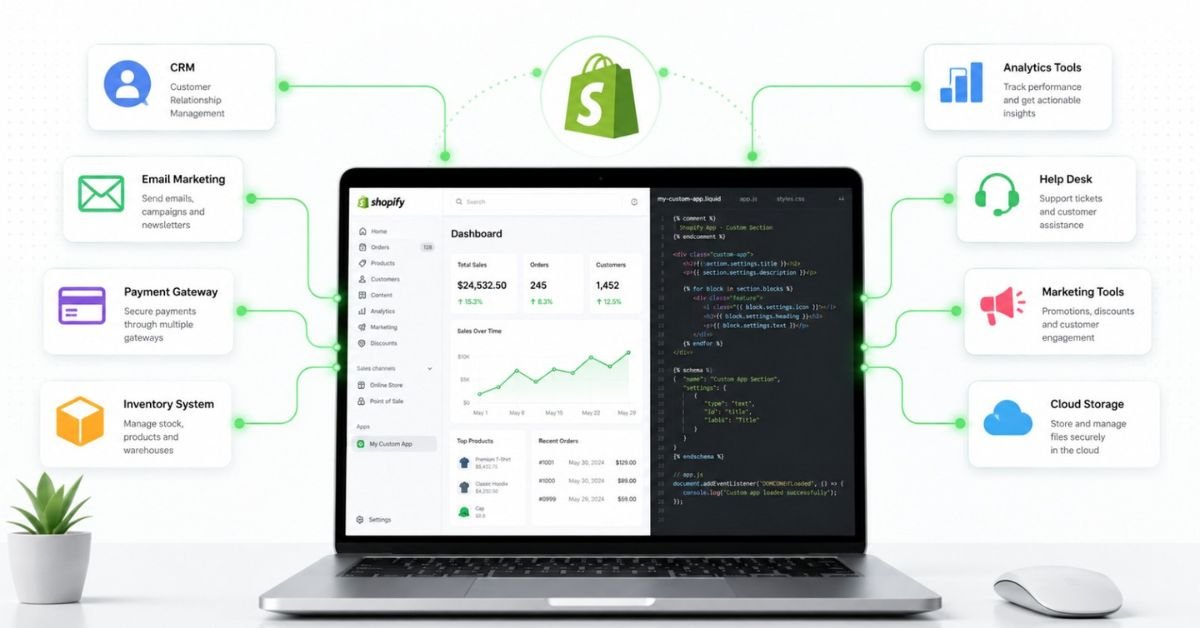
Apps extend Shopify’s functionality beyond its default features. Shopify app development allows businesses to automate workflows, improve marketing, and enhance operations. There are two types:
- Public apps (listed in Shopify App Store)
- Private/custom apps (built for specific businesses)
Common Use Cases
- Inventory management systems
- Subscription billing
- CRM integrations
- Email marketing automation
- Loyalty programs
Developers use
- Shopify REST and GraphQL APIs
- Webhooks
- OAuth authentication
Apps can significantly increase store efficiency. For example, integrating Klaviyo can automate email sequences, while ERP integrations streamline supply chain management. Shopify development at this level requires backend expertise and API knowledge.
Headless Shopify Development
Headless commerce separates the frontend from the backend, offering greater design and performance flexibility. In headless Shopify development:
- Shopify manages products, checkout, and backend
- Frontend is built with frameworks like React, Next.js, or Vue.
Benefits
- Lightning-fast performance
- Complete UI customization
- Omnichannel experiences
- Progressive Web App (PWA) capabilities
Traditional vs Headless Shopify
| Feature | Traditional Shopify | Headless Shopify |
| Flexibility | Moderate | Very High |
| Speed | Good | Excellent |
| Complexity | Low | High |
| Development Cost | Lower | Higher |
Headless solutions are ideal for enterprise brands needing advanced customization and high traffic handling.
Shopify Performance Optimization
A well-designed store won’t convert if it loads slowly. In Shopify development, performance optimization focuses on speed, smooth functionality, and user experience, not just search rankings. Faster stores reduce bounce rates, improve engagement, and increase sales.
Key Performance Improvements
- Compress and properly size images
- Use modern formats like WebP
- Minify CSS and JavaScript files
- Remove unused or heavy apps
- Defer non-critical scripts
- Optimize mobile responsiveness
- Use Shopify’s built-in CDN effectively
Even a one-second improvement in load time can significantly boost conversions. Regular testing with tools like Google PageSpeed Insights or Lighthouse helps identify performance issues early.
In short, optimizing performance ensures your Shopify store runs fast, handles traffic smoothly, and delivers a seamless shopping experience that drives revenue.
Scaling Shopify Stores for Growth
As traffic increases, infrastructure must handle growth. Shopify Plus offers enterprise-level scalability.
Scaling Techniques
- Using Shopify Plus automation (Shopify Flow)
- Internationalization (multi-currency, multi-language)
- Advanced analytics tracking
- API-based integrations
- Load testing
Brands like Gymshark and Allbirds use Shopify Plus to handle massive sales events without crashes. Scalable Shopify development ensures smooth user experiences during high-traffic events like Black Friday.
Security & Compliance in Shopify Development
Security builds trust. Shopify provides built-in security features, but developers must follow best practices.
Security Essentials
- SSL encryption
- PCI compliance
- Two-factor authentication
- Regular app audits
- Secure API tokens
Shopify’s infrastructure meets international compliance standards, reducing risks compared to self-hosted solutions.
Cost of Shopify Development
Understanding costs helps businesses plan effectively.
Cost Breakdown
- Shopify subscription ($39–$399/month)
- Shopify Plus ($2,000+/month)
- Custom theme development ($2,000–$15,000)
- App development ($5,000+)
- Ongoing maintenance
Investment depends on the level of customization and business goals.
Choosing the Right Shopify Development Partner
Not all developers deliver equal results. Choosing the right Shopify development partner ensures long-term success.
What to Look For
- Shopify Partner certification
- Strong portfolio
- API expertise
- Transparent pricing
- Ongoing support services
Ask for:
- Case studies
- Performance metrics
- SEO strategy examples
- Client testimonials
Working with certified Shopify Experts listed on Shopify’s Partner Directory increases credibility and trust.
FAQs
What skills are required for Shopify development?
Developers need knowledge of Liquid, HTML, CSS, JavaScript, and Shopify APIs.
Is Shopify development suitable for small businesses?
Yes. Shopify scales from small startups to enterprise-level brands.
What is headless Shopify?
It’s a development approach separating frontend and backend for enhanced flexibility and speed.
How long does it take to build a Shopify store?
A basic store may take 2–4 weeks, while complex projects may take 3–6 months.
Is Shopify beneficial for online store growth?
Yes. Shopify is highly effective for growing an online store. It offers reliable hosting, secure payments, mobile-friendly designs, and an easy-to-use dashboard.
Conclusion
Shopify development is more than just building an online store; it’s about creating scalable, high-performing digital commerce experiences. From custom themes and app integrations to headless architecture and enterprise scaling, Shopify provides the flexibility and reliability modern businesses need.
By leveraging best practices, performance optimization, and security, businesses can maximize conversions and long-term growth. Whether you’re launching a new brand or upgrading an existing store, investing in professional Shopify development ensures your eCommerce strategy remains competitive in an evolving digital landscape.
If you’re serious about building a powerful online store, now is the time to explore Shopify’s capabilities and partner with experienced developers who can turn your vision into reality.



Pingback: Growthscribe Explained: Services, AIDA & Pricing Guide