
Introduction
Art records culture, communicates emotion, and helps people understand different experiences. Learning about painting can still be difficult because useful information is spread across many sources.
The ArcyArt Blog and Resource Center brings important art subjects together. It covers original oil paintings, contemporary creators, South African visual culture, exhibitions, galleries, and educational resources. This makes it valuable for students, beginners, artists, collectors, teachers, and general art lovers.
This guide explains how readers can use the ArcyArt Blog to learn techniques, discover artists, evaluate artworks, and develop creative habits.
What Is the ArcyArt Blog and Resource Center?
The ArcyArt Blog combines original paintings with artist directories, gallery information, exhibition listings, art history, quotations, and definitions.These resources can be used for research and education by students, painters, and collectors.
Its main resources include
- Original oil paintings
- South African and international artist listings
- Art-history information
- Gallery and exhibition resources
- Educational articles and art definitions
These features make the ArcyArt Blog a useful discovery platform for artist research, painting methods, collecting guidance, and exhibition planning.
Why Oil Painting Remains Important in Contemporary Art
Oil paint remains popular because it offers rich color, slow drying time, and many surface effects. Artists can blend smooth transitions, add transparent layers, create realistic details, or build thick textures.
The ArcyArt Blog explains why this traditional medium still attracts modern creators. Oil painting supports portraits, landscapes, abstraction, still life, and experimental work. Contemporary artists also use it to explore identity, technology, climate, memory, and social change.
Its slow drying time lets painters adjust edges, remix colors, and revise wet sections.
Essential Oil-Painting Techniques Explained
Learning basic methods helps painters understand how oil paint behaves. The ArcyArt Blog introduces techniques that create depth, light, texture, and movement.
| Technique | How It Works | Common Use |
| Underpainting | A tonal first layer creates structure | Portraits and realism |
| Glazing | Transparent color covers dry paint | Depth and shadows |
| Impasto | Thick paint forms raised marks | Texture and expression |
| Alla prima | Wet paint is completed in one session | Quick studies |
| Scumbling | A broken light layer covers dry paint | Haze and atmosphere |
| Dry brushing | A lightly loaded brush crosses the surface | Hair, grass, and stone |
Beginners should test each method on small panels. Later, they can combine underpainting for structure, glazing for depth, and impasto for highlights.
Building a Practical Beginner’s Oil-Painting Toolkit
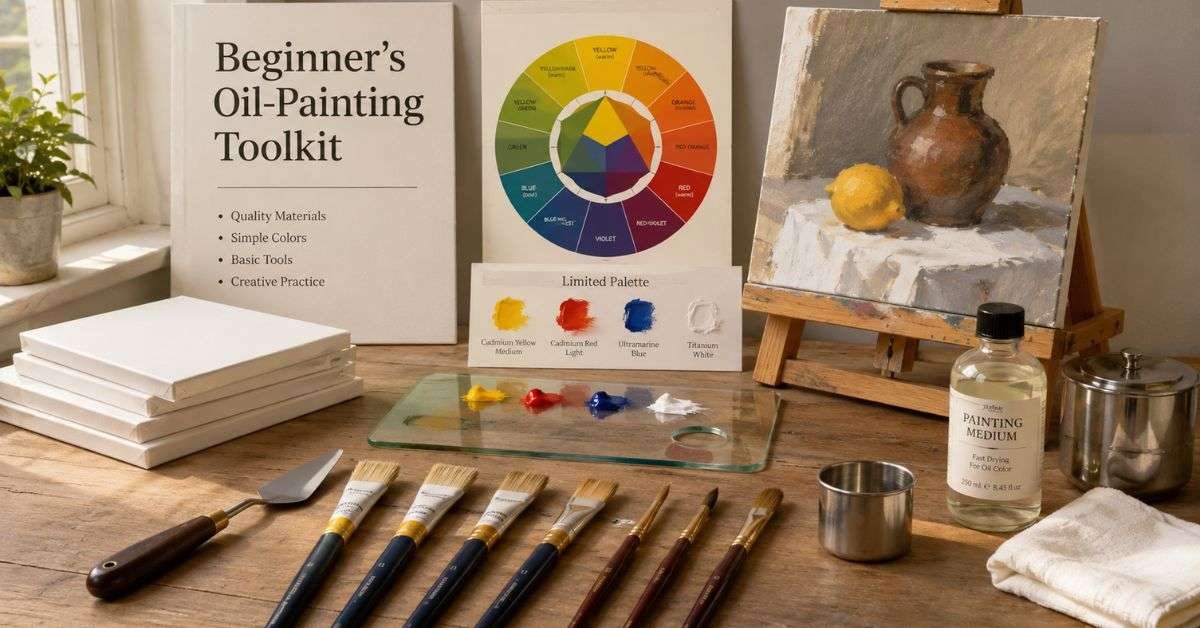
A beginner does not need an expensive studio. A small set of dependable materials is enough to practise color mixing, brush control, value, and composition. The ArcyArt Blog helps new painters separate essential tools from optional extras.
| Supply | Basic Choice | Purpose |
| Surface | Primed canvas panel | Stable painting base |
| Paint | Limited warm and cool palette | Teaches color mixing |
| Brushes | Flat, round, and filbert | Broad areas and details |
| Palette knife | Flexible metal knife | Mixing and texture |
| Palette | Glass, wood, or disposable pad | Organizes colors |
| Easel | Tabletop or standing model | Supports the artwork |
| Medium | Artist-approved product | Adjusts paint flow |
Artists should work in a ventilated area and follow product instructions. A limited palette also teaches color mixing.
Discovering South African and International Artists
Artist directories introduce readers to creators beyond famous museum names. The ArcyArt Blog includes resources connected to South African and international artists, helping visitors compare styles, subjects, regions, and cultural influences.
South African art reflects Indigenous traditions, colonial history, apartheid, resistance, spirituality, landscape, and social change across many media.
Directories can help readers
- Search for artists by name
- Discover emerging creators
- Compare styles and materials
- Prepare for gallery visits
- Research cultural influences
After finding an artist through the ArcyArt Blog, readers should also check official websites, museum collections, interviews, and recent exhibition records.
How to Study a Painting More Carefully
Anyone can improve at analysing art by observing before reading an explanation. The ArcyArt Blog may provide background information, but direct visual study should come first.
Ask
- What attracts attention first?
- Where is the light coming from?
- Which colors create the mood?
- Is the surface smooth or textured?
- Does the composition feel balanced?
- What emotion does the artwork create?
- Does its title affect the meaning?
An empty chair near a window could suggest calmness, loneliness, or memory. Strong interpretation connects such ideas to visible evidence.
Using Art History Without Copying Other Artists
Studying established painters improves knowledge of color, value, composition, symbolism, and technique. The ArcyArt Blog provides historical context that can guide this process. However, studying a work is different from copying it and presenting it as original.
Ethical study methods
- Recreating an older painting for private practice
- Making color or value studies
- Analysing light and dark patterns
- Applying a technique to a different subject
- Clearly labeling master studies
The goal is to understand construction and historical context. The ArcyArt Blog can be a starting point, while museums and academic sources support deeper research.
How to Evaluate an Original Oil Painting
Buying original art requires careful research. The ArcyArt Blog can introduce collectors to artists and artworks, but buyers should still examine condition, authorship, documentation, seller reliability, and personal value.
Important questions include
- Is the work signed, titled, and dated?
- Are its size and materials listed?
- Is an invoice or certificate available?
- Has the painting been repaired?
- Are clear photographs provided?
- Are shipping and return terms explained?
- Can its ownership history be confirmed?
A biography, invoice, condition report, and ownership record provide confidence. Buyers should also check for tears, stains, cracking paint, or poor repairs.
Caring for and Displaying Oil Paintings Safely
Oil paintings can last for generations, but sunlight, moisture, heat, dust, and poor handling can cause damage. The ArcyArt Blog improves awareness of artwork care, while qualified conservators should handle serious problems.
Basic care includes
- Keep paintings away from direct sunlight
- Avoid heaters, fireplaces, and damp walls
- Use strong hanging hardware
- Hold framed work from both sides
- Never press the canvas
- Avoid wet cloths and household cleaners
- Contact a conservator if paint lifts or cracks
It is not advisable to remove old varnish at home. Display paintings in stable rooms away from moisture, heat, leaks, and strong air-conditioning.
Turning Art Resources Into Creative Progress
Reading becomes valuable when it leads to practice. The ArcyArt Blog can provide ideas, artist references, and useful terminology, but improvement depends on consistent action.
A simple four-week plan can help
- Week one: Make black-and-white value studies.
- Week two: Paint one object with a limited palette.
- Week three: Test glazing, scumbling, and impasto.
- Week four: Complete a small original painting.
A studio journal can record sketches, mixtures, drying times, and mistakes. Gallery visits and regular practice can then turn online knowledge into skill.
FAQs
Is this platform only for professional artists?
No. The ArcyArt Blog is useful for beginners, students, teachers, collectors, working artists, and general readers interested in visual art.
Can beginners learn oil painting from online resources?
Online guides can explain materials and techniques, but improvement also requires practice, safe studio habits, observation, and feedback.
What is an effective oil painting method for novices?
Alla prima and underpainting are useful starting methods because they teach application, value, composition, and color control.
How can I tell whether an oil painting is original?
Examine the painted surface and request artist information, documentation, photographs, condition notes, and ownership history.
Should oil paintings be displayed behind glass?
Many traditional oil paintings are displayed without glass. Delicate surfaces may require advice from a professional framer or conservator.
Conclusion
This resource center brings together original oil paintings, contemporary artists, South African art, exhibitions, galleries, art history, and educational information. Its broad coverage makes it useful for people at different stages of their artistic or collecting journey.
Painters can study techniques, students can learn art history, and collectors can research artists. General readers can also discover new creators.
Practise a technique, research an unfamiliar artist, visit an exhibition, or study a composition. Combining knowledge with observation builds a lasting relationship with art.